Insulation material
Spray Foam Insulation
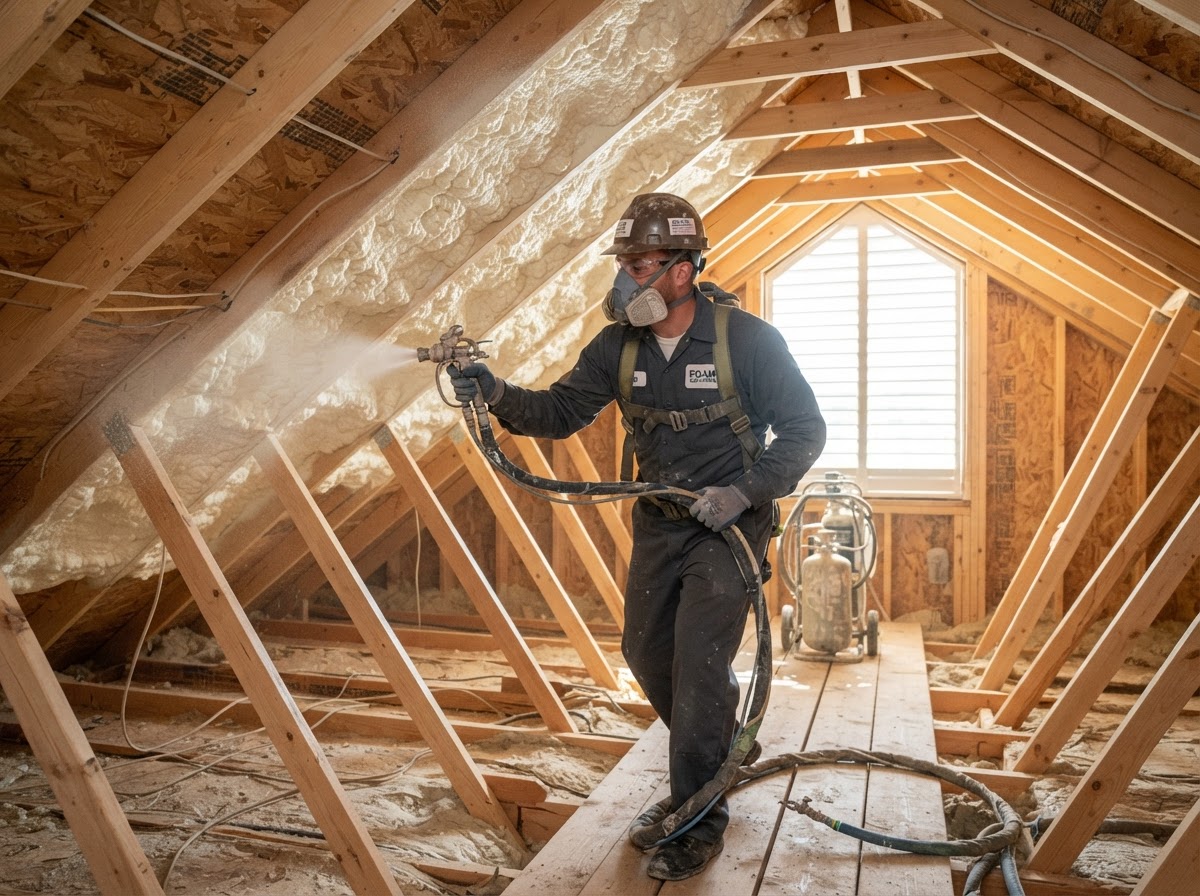
Spray foam is a spray-applied insulation that expands in place to fill cavities, gaps, and cracks. It is valued because it insulates and air-seals in a single step, limiting the movement of air through the building enclosure. R-value measures resistance to heat flow; air sealing and moisture management are related but separate concerns. We help you assess whether spray foam fits your building, your access, and your comfort goals.
Problems it addresses
- Rooms that stay too hot in summer or too cold in winter
- Drafts and uncontrolled air leakage through gaps in the building enclosure
- Uneven temperatures between floors or rooms
- An attic or crawlspace you want to bring into the conditioned space
Where it fits
Spray foam is commonly used in attics (underside of the roof deck), wall cavities, and rim joists. Suitability and finished thickness depend on the building and the chosen product's specifications — there is no universal thickness or R-value that fits every job.
What affects scope & price
- Total area to be insulated and required thickness for the target R-value
- Product choice and the manufacturer's installation guidance
- Access — attic hatch size, crawlspace clearance, wall cavity depth
- Preparation: masking, ventilation during cure, and any removal of old insulation
- Building condition and any needed air-sealing or moisture prep before foam
What to expect
From estimate to installation
- 01
A walk-through assessment of the area, access, and the project scope you want quoted
- 02
Discussion of the product, target thickness, and how it fits your building
- 03
Site prep, masking of adjacent surfaces, and ventilation set up for the cure period
- 04
Spray application, then a return-to-building window that follows the manufacturer's guidance
Alternatives
Related options
Other services that may fit your project.
Questions
Spray Foam Insulation FAQ
Does spray foam guarantee lower energy bills?
No. R-value measures resistance to heat flow. Insulation and air sealing can improve comfort and reduce heat loss or gain, but actual bill changes depend on the building, climate, equipment, and how the building is used. We won't promise a specific savings figure.
How thick should my spray foam be?
Thickness depends on the building, the chosen product, and the R-value you're targeting. We follow the manufacturer's specifications for the product actually selected — there is no one-size-fits-all thickness.
Is spray foam waterproof?
No. Spray foam is not a waterproofing product and does not solve roof leaks or existing ventilation problems by itself. Moisture management is a separate design concern we can discuss for your building.
How soon can I re-enter after installation?
The return-to-building timing follows the manufacturer's guidance for the specific product used. We'll review that timing with you before the work is scheduled.
Open-cell or closed-cell — which do I need?
Each behaves differently with moisture, cost, and thickness. We assess your building and the application, then recommend the option that fits. See our open-cell vs. closed-cell guide for the comparison.
Do you offer free estimates?
Yes — we provide free estimates. Tell us about your project and we'll discuss the scope and next steps.
Get a free estimate for spray foam insulation
Tell us about your building and your goals. We'll discuss the scope and next steps.